
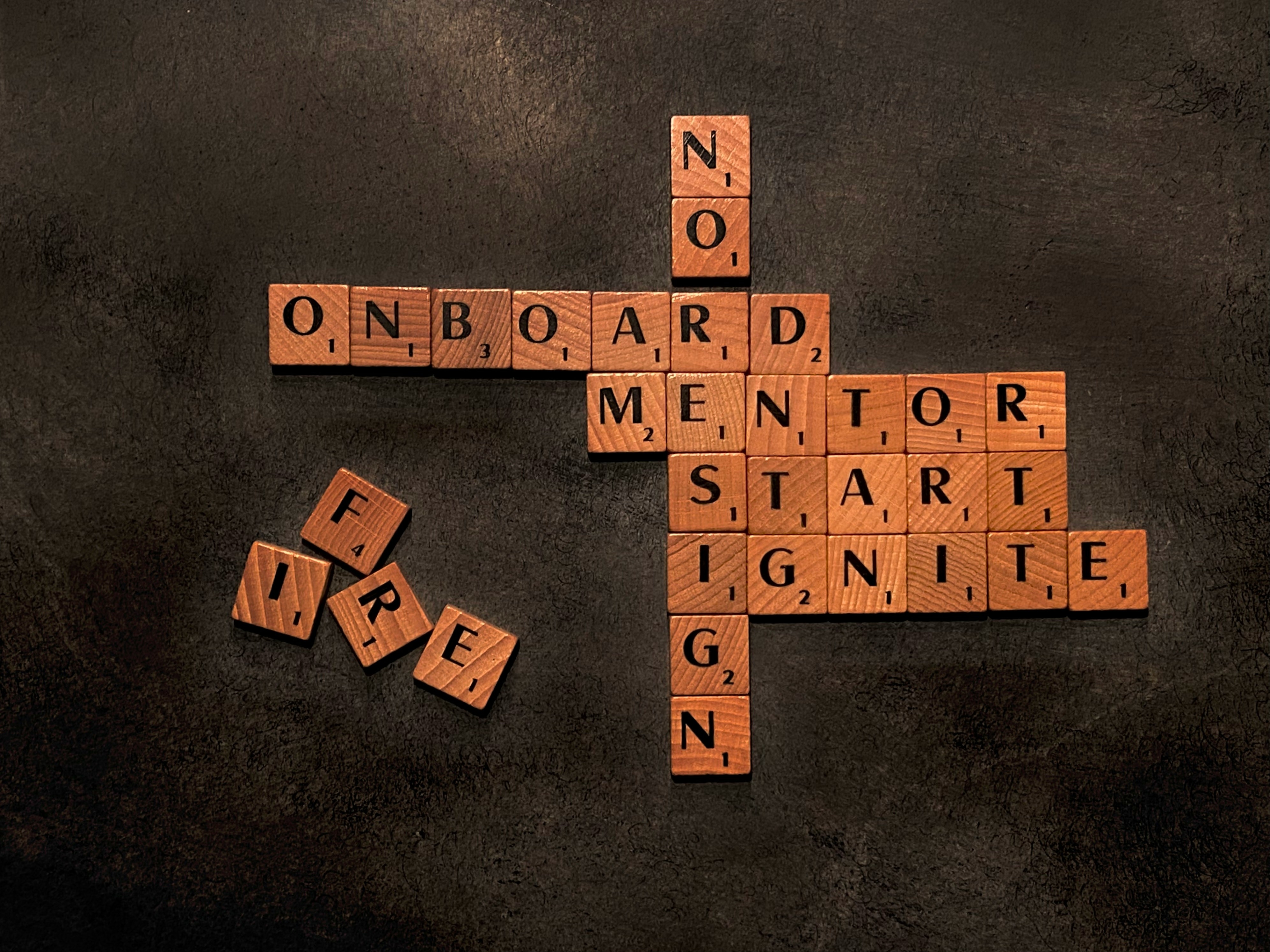
Create the Clarity Before You Need to Correct the Confusion
Hiring gets the right person through the door. A clear 30-60-90 day onboarding process helps them succeed once they’re there.
In my last article, I wrote about one of the unwritten rules we tend to carry into the workplace: “I can manage myself, so I expect you to be able to manage yourself too.”
The problem with that assumption is that we expect people to know things we have never actually made clear. We know how things work around here. We know what good looks like. We know who to ask, which systems to use, what matters most and all the little unwritten expectations that come with being part of the team. Then we become frustrated when somebody else doesn’t seem to know those things too.
But what happens when that person is brand new?
They don't just have a gap in knowledge. Almost everything is uncertain. They may have the technical skills and experience that got them through the recruitment process, but they don’t yet know your workplace. They don’t know your people. They don’t know your systems, your preferences, your rhythms or the thousand little things that everybody else has learned through being there.
Yet we often recruit someone because they are capable and then expect that capability to somehow translate into immediate competence in an environment they have never experienced before. This came up in a coaching conversation recently with a leader who had just been through a fairly difficult recruitment process.
She had ultimately chosen the person she believed was the best candidate, but once the decision was made, her attention shifted fairly quickly from recruitment to what happened next. She was conscious that this person was coming into an established team from outside the organisation, and she wanted to make sure she got the onboarding right.
As we explored what was worrying her, I asked her a question: “What risk are you actually trying to mitigate here?”
Her answer was revealing. She needed clarity in her own mind about what the onboarding needed to look like so the new person could achieve the outcome the team needed. In other words, she was trying to remove uncertainty. That took us straight back to something I talk about regularly with leaders: certainty matters.
When people don’t know what is expected of them, where they fit, who they can go to, whether they are doing a good job or what they should be concentrating on, they naturally spend energy trying to work those things out.
For a new employee, there is uncertainty everywhere.
Think about what it feels like to walk into a new workplace. You don't know the personalities yet. You don't know which questions are okay to ask. You don't know whether your manager wants you to check everything with them or figure things out yourself. You don't know who actually knows what. You don't know whether the way you did something in your previous organisation is the way it is done here. You may not even know where the coffee cups are!!
Meanwhile, your manager is busy thinking, “They’re experienced. They’ll work it out.” Eventually, they probably will. The question is, how much unnecessary uncertainty do they have to navigate while they do?
Onboarding isn't an information dump
Most organisations have some kind of onboarding process. There are forms to complete, policies to read, systems to access, introductions to make and mandatory training to get through. All of that is necessary, but I’m not sure that completing an onboarding checklist necessarily means somebody has been onboarded well.
You can give somebody an enormous amount of information in their first week and still leave them with very little certainty about what they should actually be doing. That was where the coaching conversation shifted. Rather than thinking about onboarding as everything this new employee needed to know, we started thinking about it as a staged process for building certainty.
I suggested a simple 30-60-90 day structure. Not because there is anything magical about those numbers, but because they give both the leader and the employee something incredibly useful: a clear focus for each stage. Instead of trying to teach somebody everything at once, you can ask a much better question. What does this person need to be certain about now?
The first 30 days: Understand the role
The first 30 days should be heavily weighted towards role clarity. They were recruited against a role description, so start there and bring that role to life.
What is this role actually here to achieve? How does it connect to the work of the broader team? What are the major responsibilities? What does good performance look like? Which systems and resources will they need? Who do they need to communicate with? Where are the boundaries of their authority? What decisions can they make themselves and what needs to come back to you?
As I said to my client, imagine being able to tell the new employee, “For your first 30 days, this is what we're concentrating on. We want you to understand your role, how it connects, who you need to talk to, what each responsibility looks like and where you can find the resources you need.”
Suddenly the employee doesn't need to work out what they should be focusing on. You've told them. That doesn't remove personal responsibility. It creates the conditions in which they can start taking responsibility.
There is another piece that matters enormously during this stage: give them people to go to.
One of the things my client recognised from her own experience was how difficult it had been when she didn't have somebody she could easily approach to clarify something or ask a question. We talked about intentionally connecting the new employee with key people across the team and organisation so that he wasn't completely dependent on his manager for every answer. That connection creates certainty too.
“I don't know the answer, but I know who I can ask” is a very different experience from “I have absolutely no idea what I'm supposed to do.”
Days 30–60: Start building capability and ownership
Once somebody understands the role, the focus can begin shifting. Now you are watching how they apply what they know.
Where are they picking things up quickly? Where are the gaps? What additional training or support would help? What strengths are starting to emerge? Where can you begin stepping back and allowing them to take greater ownership?
This is also where regular feedback becomes incredibly important. In the coaching conversation, we talked about using this stage to establish a clear one-to-one cadence and have deliberate conversations about skill progression. The employee brings their existing skills and experience with them, but now both of you are learning how those skills fit into this particular role, team and environment. You are effectively saying, “You know what you're here to do. Now let's work out how you can do it really well.”
The manager starts moving from instructor towards coach. You are still available. You are still observing. You are still providing feedback. But you're no longer holding the person's hand through every step. You're creating enough certainty for them to start exercising judgement.
Days 60–90: Look beyond the role
By the time someone reaches the third month, the conversation can become broader again. They should have a reasonable understanding of their role and be developing greater ownership of it. Now they can begin seeing how their work fits into the bigger picture.
What are the team's priorities? What is happening across the organisation? Who are the important stakeholders? What challenges are coming? Where can this person contribute beyond simply completing the tasks in their role description?
This is where you begin moving from “This is my job” towards “This is how my job contributes.” And that distinction matters. We don't want people to remain dependent on their manager forever. Good onboarding should ultimately create the opposite. It should progressively give somebody enough knowledge, connection, capability and confidence that they can operate with greater autonomy. That's why I don't see structure and autonomy as opposites. Structure at the beginning can actually create autonomy later.
Certainty isn't micromanagement
This is where some leaders get uncomfortable. They worry that giving somebody this much structure means spoon-feeding them or micromanaging them. It doesn't.
Micromanagement is holding onto control when someone has demonstrated that they are capable of exercising it themselves. Onboarding is giving someone enough context to become capable of exercising it. Those are very different things.
You can absolutely recruit a highly experienced person and still recognise that they need certainty when they enter your organisation. Their experience may mean they move through the stages faster, need less instruction or take ownership sooner. Great. Adjust accordingly.
The framework shouldn't become another rigid process people have to comply with. It is simply a way of asking, “What does this person need from me at this stage to succeed?”
Don't wait for the problem to create the clarity
This brings us back to the unwritten rule. Too often, we only make our expectations visible after somebody fails to meet them. We wait until they misunderstand the role. We wait until they make the wrong decision. We wait until they miss a deadline. We wait until their behaviour frustrates us. Then we explain what we expected.
There is a much easier way - create the clarity before you need to correct the confusion.
When somebody joins your team, don't just give them a role description, introduce them to everyone and hope they'll figure the rest out. Think deliberately about the first 90 days.
What do they need to understand in the first 30? What should they be starting to own by 60? What should greater independence and contribution look like by 90?
Then keep talking about it.
Check their understanding, ask what is still unclear, give them feedback, introduce them to the people who can help them and adjust the support as their capability grows.
REMEMBER: your job as their leader isn't to remove every uncertainty they will ever experience, it’s to create enough certainty that they can confidently start navigating the uncertainty for themselves… and perhaps that's the real purpose of onboarding. Not simply to help someone start the job, but to progressively help them become confident enough to o