Are We Making Life Too Easy for People to Grow? | Performastery
I've been thinking a lot lately about how much effort we put into making life easier.
We want things to be faster, simpler, more convenient and predictable. We want systems that anticipate our needs, technology that solves our problems and processes that remove unnecessary steps... and for the most part, that's a good thing.
Why would we deliberately make something difficult when there's an easier way to do it?
But after listening to emotional fitness educator Joe Pane speak recently about our relationship with uncertainty, I've found myself questioning something.
In our efforts to remove friction, discomfort and uncertainty from our lives, are we also removing some of the very experiences that help us develop the skills to handle them?
To take it a step further - if that's happening in our everyday lives, what might it mean for the way we're developing people in our workplaces?
We've become too good at removing the hard bits
Think about how much has changed in the way we go about our daily lives. We don't need to navigate unfamiliar places because our phones tell us exactly where to turn. We don't need to remember phone numbers, work out complicated calculations or spend much time searching for information because we can access answers almost instantly.
If we don't know how to do something, there's probably a video explaining it. If we don't feel like going out, we can have just about anything delivered to our door. In the past 12 months the rapid and prolific rate of AI integration into every platform and tool we use has meant that technology largely now does the thinking, writing and problem-solving for us too.
Now, I'm not suggesting we should throw away our phones, stop using technology or deliberately make life more difficult. I'm a big believer in finding smarter ways to do things. Full disclosure - yes I used AI to help me draft this article!
But I do wonder what happens when we become so accustomed to having the difficulty removed that we get fewer opportunities to practise working things out for ourselves.
Here's a few things to consider:
What happens to our patience when we're used to instant answers?
What happens to our problem-solving skills when we rarely have to sit with a problem long enough to figure it out?
What happens to our confidence when we don't regularly experience the satisfaction of working through something we initially didn't know how to do?
What happens to our ability to handle uncertainty when we've spent so much time trying to eliminate it?
I don't think these are questions we should ignore.
There's a difference between making something easier and making someone more capable
One of the ideas Joe Pane explored when I saw him speak at an event on 12 November 2026 was the relationship between uncertainty and emotional fitness.
He spoke about different levels of uncertainty, from the variety we introduce into our everyday routines, through to adventure and challenge, and then the more difficult uncertainty that arrives in the form of problems and crises.
What interested me was the distinction between the uncertainty we choose and the uncertainty we don't.
We can choose to try something unfamiliar, take on a challenge, learn a new skill, have a conversation we've been avoiding or put ourselves in a situation where we don't already know the outcome. We don't always get to choose when life throws a serious problem or crisis our way.
Joe's message was that by proactively inviting adventure and challenge into our lives, we can expand our comfort zones and develop a greater capacity to handle uncertainty especially when a problem or crisis hits.
I think there's a really important lesson in that for leadership.
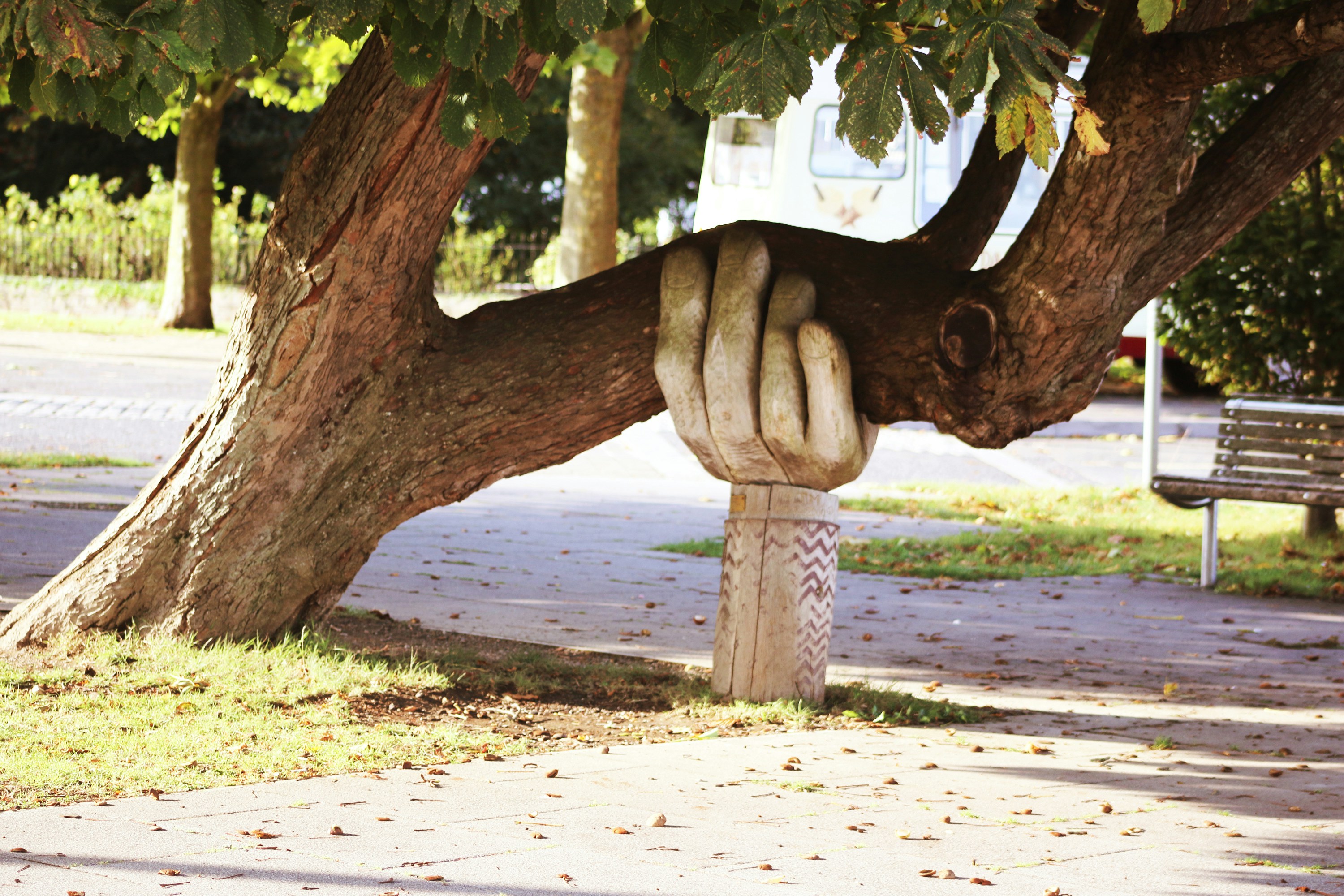
There's a difference between creating an environment where people feel supported and creating one where they never have to experience anything uncomfortable. One helps people grow. The other can unintentionally keep them dependent.
Are we rescuing our people instead of developing them?
This is something I see regularly when working with leaders. A team member comes to their manager with a problem. The manager knows the answer. They've probably dealt with the same issue dozens of times before, and they can see exactly what needs to happen. So they tell the person what to do. Problem solved.
The team member gets their answer, the work keeps moving and everyone gets on with their day. Except what happens the next time that person encounters a similar problem?
There's a good chance they go straight back to the manager.
Not necessarily because they're incapable of working it out, but because they've learned that asking the manager is the quickest and easiest way to get the answer. Then the manager, who is already busy, starts wondering why nobody seems capable of making decisions without them.
Sound familiar?
Here's the interesting part. The manager may genuinely believe they're being helpful. They care about their people. They want to keep things moving. They don't want someone wasting time or making a mistake that could have been avoided.
But the intention to help and the impact of that help aren't always the same thing.
Sometimes, by making the immediate problem easier for someone, we make it harder for them to develop the capability to solve the next one.
When that pattern repeats itself across a team or an organisation, we can end up with people who are very good at following instructions but much less confident when they're required to think independently. Not because they lack potential, because they haven't had enough opportunities to practise dealing with problems and crisis for themsleves.
We don't build strength by avoiding resistance
Having spent a significant part of my life training and competing as an athlete, I keep coming back to the comparison with physical fitness. If you want to get stronger, you need to introduce resistance. You don't build strength by lifting something that requires absolutely no effort.
You introduce a manageable challenge, allow your body to adapt, recover and then gradually increase what you're capable of handling. Of course, the challenge needs to be appropriate. Too little resistance and there's not much development. Too much, without the necessary preparation or recovery, and you risk injury.
The same principle offers a useful way to think about developing people.
If we never give someone a challenge that stretches their current capability, why would we expect that capability to grow?
If we always make the decisions for them, when do they develop their own judgement?
If we always have the difficult conversations, when do they learn how to navigate conflict?
If we step in every time something becomes uncomfortable, how do they discover what they're actually capable of handling?
This doesn't mean leaving people to struggle unnecessarily. It means recognising that some discomfort is part of learning and that there's a difference between a person being uncomfortable because they're growing and being overwhelmed because they haven't been given the support they need.
That's a distinction good leaders need to learn to recognise.
Sometimes the leader is the one who needs to get comfortable with uncertainty
Here's where I think this gets particularly interesting. It's not always the team member who is uncomfortable with uncertainty. Sometimes it's the leader.
Think about what happens when you delegate something important to someone who hasn't done it before. You know how you would approach it. You know the mistakes they might make. You know it will probably take them longer than it would take you... and then you watch them doing it differently.
Perhaps they ask questions you wouldn't ask. They take a different approach. They make a decision you wouldn't have made. Everything in you wants to step in. Not necessarily because they're doing something wrong but because you're uncomfortable not being in control of the process.
So you offer a suggestion.
Then another.
Then you start checking their progress.
Before long, you've taken over the very thing you were trying to delegate and the person on the receiving end learns something from that experience. They learn that you have a preferred way of doing things. That you'll probably step in if they're not doing it that way and that perhaps it's safer to check with you before making a decision next time.
You may have intended to develop their confidence but your behaviour could be teaching them to doubt their own judgement.
Sometimes, the uncertainty we need to learn to handle as leaders is allowing someone else to do something differently from the way we would do it.
That can be surprisingly difficult, particularly for people who have been promoted into leadership because they're exceptionally good at their jobs.
Being great at your job and being great at leading people require different skills
This is one of the biggest shifts we work on through Leaders Unleashed. People are often promoted because they're technically capable. They're reliable, knowledgeable, experienced and good at solving problems. They're the person everyone turns to when something needs sorting out and then they become responsible for leading other people.
Suddenly, the very behaviours that made them successful in their previous role can start getting in the way. They've spent years building their reputation on knowing the answers, solving the problems and delivering the results. Now their success depends on helping other people develop those capabilities.
That's a very different job.
Instead of asking, How do I solve this problem?, they need to start asking, How do I help this person develop the ability to solve it?
Instead of being the person who makes every decision, they need to create the conditions where others can make good decisions. Instead of stepping in whenever something gets difficult, they need to recognise when to provide support and when to give someone the space to work through the challenge and that requires a shift in leadership identity.
From being the person who does the work to becoming the person who develops the people doing the work.
So how do we create environments where people can grow through challenge?
I don't believe the answer is to deliberately make work harder or leave people to figure everything out for themselves. There's enough unnecessary frustration in most workplaces already.
Poor systems, unclear expectations, conflicting instructions, unrealistic workloads and a lack of support aren't developmental challenges. They're problems leaders should be working to fix.
We don't need to manufacture more of those. But we do need to get better at recognising the difference between unnecessary friction and useful challenge.
For example, when someone comes to you with a problem, perhaps the first question doesn't need to be, "What do you need me to do?" It could be:
"What have you considered so far?"
"What do you think your options are?"
"What would you recommend?"
"What support do you need from me to take the next step?"
Those questions don't remove your responsibility as a leader. They change how you use your experience. Instead of using what you know to provide every answer, you're using it to help someone else develop their thinking.
The same applies to delegation.
If you want someone to take greater ownership, they need to understand what they're responsible for, what a good outcome looks like, which decisions they can make and when they need to involve you. Then you need to give them room to act within those boundaries.
And if they make a mistake?
Provided the risk was appropriate and the consequences are manageable, perhaps the most useful conversation isn't about why they didn't do it your way. Perhaps it's about what they learned, what they'd do differently and how they might approach a similar situation next time. That's how experience starts turning into capability.
Challenge needs to be supported, not imposed
There's another important part of this conversation.
We can't simply tell people they need to become more resilient or comfortable with uncertainty while placing them in environments where expectations are unclear, mistakes are punished and support is unavailable.
That's not developing emotional fitness. That's asking people to absorb the consequences of poor leadership.
People need enough clarity to understand what's expected of them, enough safety to ask questions and learn, and enough support to tackle something they haven't done before. They also need appropriate opportunities to make decisions and experience the consequences of those decisions.
When those conditions exist, challenge becomes something people can learn from rather than simply something they have to survive and that is a very different experience.
The aim isn't to remove every uncomfortable moment. It's to create an environment where people can work through uncomfortable moments, develop confidence in their capability and gradually expand what they're able to handle.
What if we measured leadership by the capability we're developing in others?
I wonder how differently we might lead if we stopped measuring our value by how many problems we personally solve.
What if we paid more attention to how many problems our people are becoming capable of solving without us?
What if we saw a team member making a sound decision independently as evidence of our leadership, rather than something we needed to oversee?
What if we celebrated someone having a difficult conversation themselves, rather than congratulating ourselves for stepping in and handling it?
What if we became more intentional about giving people opportunities to experience manageable uncertainty before they find themselves dealing with situations they didn't choose?
We can all agree that uncertainty isn't going away. Businesses change. People leave. Customers behave unpredictably. Technology evolves. Priorities shift. Things go wrong. We cannot prepare people for every possible situation they might encounter. We can help them develop the confidence, judgement, awareness and practical skills to navigate situations where they don't already know the answer.
Perhaps that starts with us recognising that making life easier for someone isn't always the same as making them more capable.
The question I encourage every leader to ask
The next time someone comes to you with a problem, or you find yourself about to step in and take over, I invite you to consider asking yourself - Am I helping this person become more capable, or am I simply making this moment more comfortable?
Sometimes the right answer will be to step in. Sometimes the situation genuinely needs your experience, authority or immediate intervention and sometimes the most valuable thing you can do is resist the urge to rescue, instead, ask a better question and give someone the opportunity to work it out for themselves.
Our job as leaders isn't to remove all uncertainty from people's working lives. It's to help them develop the capability to navigate it and perhaps the next stage of leadership development isn't about finding more ways to make things easier. Perhaps it's about getting better at recognising which challenges are worth keeping.
I will leave you with this final reflection question to ponder and practise:
Are you creating an environment where people can grow through challenge, or one where you've become so good at removing the challenges that they rarely get the chance?
Developing leaders who develop others
At Performastery, this is one of the important shifts we work through in our Leaders Unleashed leadership development programs.
We help capable people move from being great at their job to becoming great at leading people, developing the self-awareness, confidence and practical skills to coach, delegate, empower and support others through uncertainty.
We know that effective leadership isn't about having all the answers, it's about helping people develop the confidence and capability to find their own.
Explore ways to work with me: https://performastery.com.au/work-with-me
Fiona Cullen is the founder of Performastery Leadership Facilitation and facilitator of the Leaders Unleashed leadership development programs.