When playing it safe starts to cost you more than taking the risk
This morning I sat with a client who, on the surface, was doing fine.
She came in buoyant, thoughtful, engaged. A little physically depleted thanks to a recent injury. Mildly frustrated about the uncertainty of what comes next in her career. Nothing dramatic. Nothing broken.
And yet, underneath the practical questions about roles, applications, and next steps, there was something very familiar.
That quiet tension between wanting stability and craving challenge. Between staying safe and wanting more. Between playing it sensible and feeling yourself slowly dim.
She’s not reckless. She’s not impulsive. She’s deeply capable. And she’s surrounded by people who care about her, people who want to protect her, keep her safe, make sure she doesn’t make a “mistake”.
The problem is, their well-meaning caution has started to wake up her inner critic.
You know the voice.
“Maybe I can’t do this.” “Maybe I should just stay where I am and see it through.” “Maybe now’s not the right time.”
Not because she believes it deep down, but because everyone else is nervous on her behalf.
What we uncovered quite quickly is that this moment isn’t really about one job or one organisation. It’s about fit.
Fit for her values. Fit for her intellect. Fit for her energy and how she’s wired to work.
She’s not industry loyal. She’s work loyal. She thrives where she can build, improve, organise, and leave things better than she found them. Once the system works, she naturally looks for the next challenge, not because she’s flaky or restless, but because growth is how she stays alive and engaged.
When we reviewed her CV, something interesting happened.
Reframing her experience from tasks to outcomes didn’t just strengthen her application. It reminded her of the depth and breadth of what she’s already delivered. The discomfort she felt about “overselling” herself, especially in roles that didn’t feel strategic at the time, revealed an old pattern, minimising her contribution rather than owning it.
That’s not a capability gap. That’s a confidence blind spot.
As the session unfolded, we named something important. The need to “prove yourself” is not motivation. It’s usually a sign of an unresolved belief about not being enough. And no amount of external validation ever fully fixes that.
The work here isn’t about convincing others she’s ready. It’s about anchoring her own sense of value so decisions come from clarity, not fear.
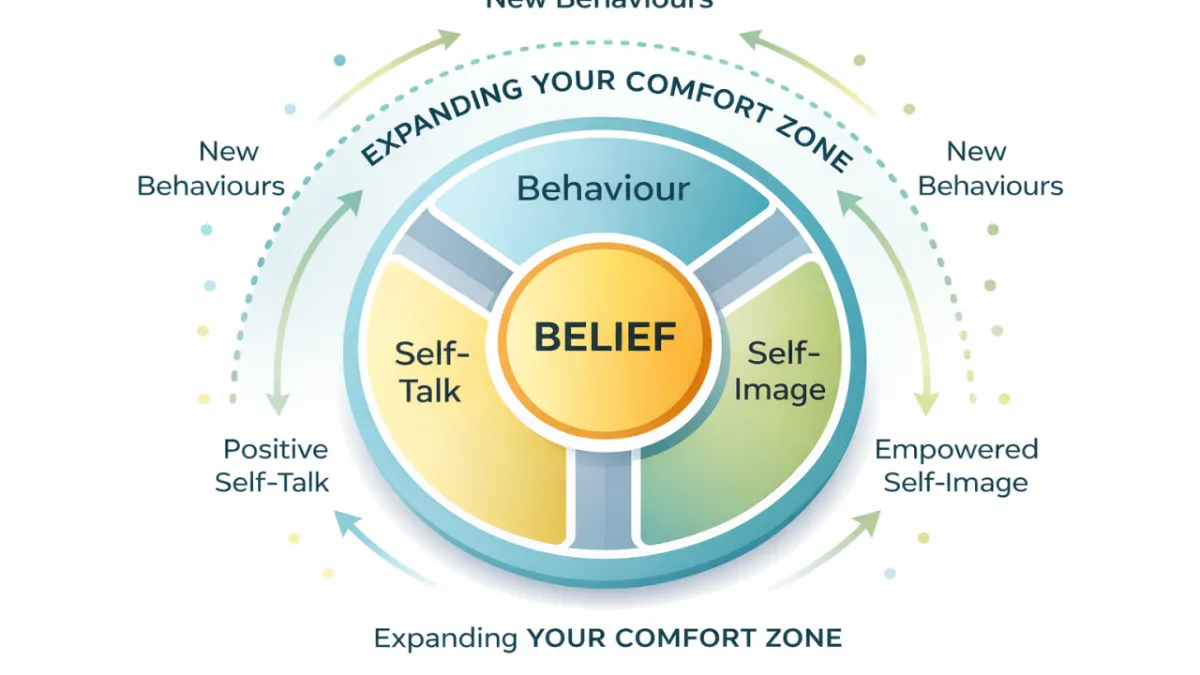
One of the most powerful shifts came when we talked about comfort zones.
So many people think change means stepping outside them. And no wonder it feels terrifying. Your nervous system reads that as threat.
But comfort zones don’t need to be escaped. They need to be expanded.
She’s not taking reckless risks. She’s widening her options. And that subtle reframe changes everything. It removes danger and replaces it with possibility. Confidence grows without self-sabotage.
Here’s the part that really matters.
The fear of taking a risk is uncomfortable. But the reality of staying, staying small, staying safe, staying in work that no longer fits… that’s worse.
Slow erosion is still loss.
By the end of the session, she was steadier. Clearer. More self-trusting. She moved from “What should I do?” to “I know how I work best. Now I’ll design around that.”
And that’s where sustainable, aligned careers actually begin.
If you’re in a season where playing it safe looks sensible on the outside but feels costly on the inside, it might not be time to leap. But it is time to expand.
I’ve created a Leadership Identity Belief Change Activity to help people work with the beliefs that keep them small, quietly, thoughtfully, and without forcing confidence. It’s designed to help you expand your comfort zone rather than abandon it.
If this resonates and you recognise yourself in it, send me a DM and I’ll share the Leadership Identity Belief Change Activity with you as a PDF. It’s a simple, reflective exercise to help you expand your comfort zone without forcing yourself into someone you’re not.
REMEMBER: Staying safe is only helpful if it’s not slowly shrinking your life.